Boundaries Part 2
Last month’s newsletter introduced the topic of boundaries. We learned that we all need boundaries to help us discern what is our responsibility and what is not, to help us live our lives the way we want to, and to identify what we will and will not accept in our lives and environment. We were reminded that there are no right or wrong boundaries. Each person needs to decide for themselves what they can or cannot live with, and what works for one person may not work for another.
So, how do I set a boundary?
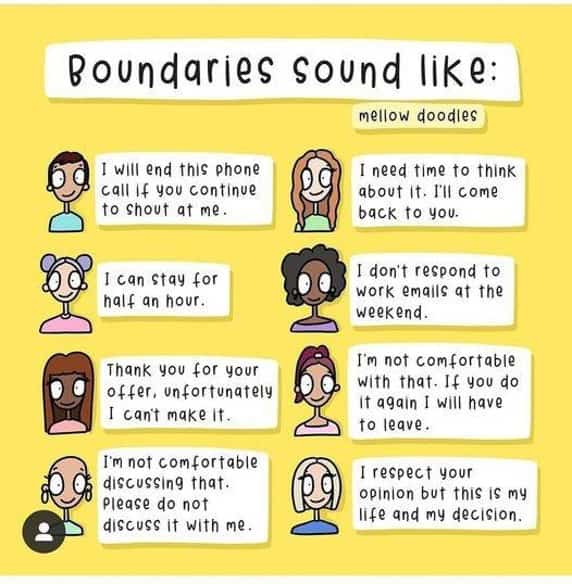
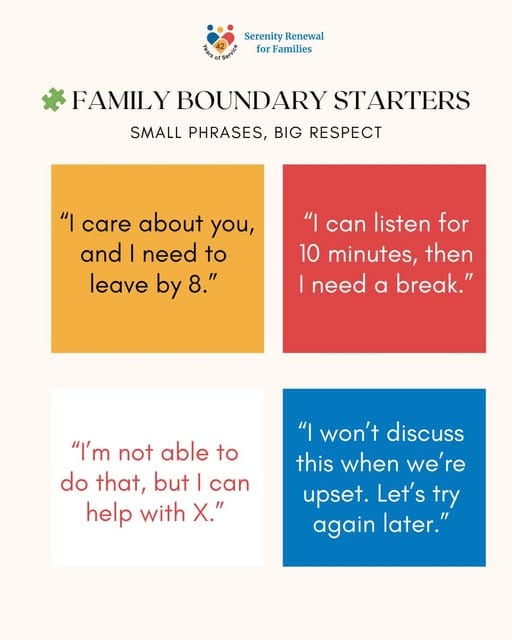
We start by identifying the boundary needed. This could be something as simple as what time I go to bed or as complex as choosing to not allow my intoxicated loved one into my home. Next, we need to clearly communicate our boundary. Making a simple statement is the most effective. This helps us to keep our emotions out of the conversation. We may want to write out or rehearse what we need to say. Remember to use “I” statements such as, “I feel…” or “I’m not comfortable with…”. Avoid attacking the person and stay focused on the issue at hand. And try to use a calm voice when stating your boundary. If you feel your emotions rising, you can simply restate the boundary or leave the room.
We may also need to communicate the consequence of the other person not accepting our boundary. For example, “if you continue to yell, I will hang up the phone” or “if you are intoxicated when I come to pick you up, I will not give you a ride.”
Accept that discomfort or guilty feelings will come naturally but don’t let them hinder you from following through with your boundary. Remind yourself that you’re setting this boundary for a reason and backlash from the other person involved can be expected.
Many people have said they can set the boundary but have a hard time following through with it. When the pressure is on, emotions are high, it’s hard to stick with what we’ve said. So try only setting boundaries that you know you can enforce. Start by practicing with safe people or in “simple” situations. For example, set your bedtime and stick with it for a week or set a boundary with a friend who is understanding and supportive. Make your boundaries reasonable and do-able, and have a back up plan. If you have told your loved one you will leave the party if you feel uncomfortable with his drinking, pre-arrange with a friend to give you a ride home. I heard someone say they would write themselves a letter about how their loved one’s behaviour made them feel and would refer back to that letter when they felt like giving in. This reminded them of why they initially set the boundary and what they didn’t want to continue to experience.
Remember, boundaries don’t have to be forever. They can be changed or adjusted as circumstances or your needs change. You may want to set a time limit for the boundary and then re-assess after a week or a month.
Learning to set boundaries can be challenging at first. It’s helpful to have a supportive friend or a group of people who understand you. This is where peer-support groups such as Al-Anon, Nar-Anon, or CoDa are helpful. Hearing other people’s stories and sharing our own helps us gain some perspective and introduces us to new ideas we can try. “If we ask for help and look for answers, we’ll find the information, clarity, guidance, and power to set and enforce the limits that are right for us.”*
I have found The Serenity Prayer to be a great tool for asking for help:
God grant me the serenity
To accept the things I cannot change
Courage to change the things I can
And wisdom to know the difference
As we head into a new year, may you have the serenity, courage, and wisdom to set the boundaries you need to live the happy and healthy life you deserve.
~ Amy Lauber
*From: The New Codependency by Melody Beattie, copyright 2009 by Melody and Company, Inc., page 39